December 7th, 2011
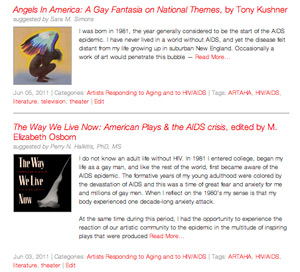
On World AIDS Day we soft-launched a new blog on our website, “Artists Responding to Aging and to HIV/AIDS,” or “ARTAHA.” As we explain in some detail in our introduction to the blog, we have been inviting older adults living with HIV as well as people of all ages from the arts, HIV/AIDS, and aging services and research communities to tell us about creative work that has affected the way they think about aging, HIV/AIDS, or aging with the virus. The work can be in any medium: photography, literature, music, theater, dance, film, television, any of the other visual, media, or performing arts…
the only limitations are that the individual piece or body of work be (a) creative work, (b) created by someone else, that (c) has been personally or professionally meaningful for the contributor. We supplement their reflections with a range of links to websites, articles, and other resources that invite the reader to get to know both the work suggested — and the person doing the suggesting — a little bit better.
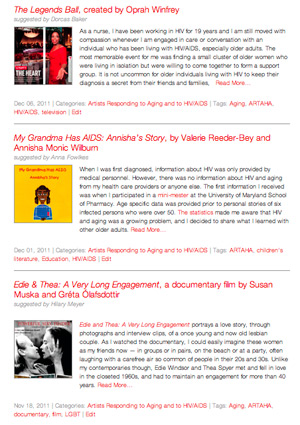
We are delighted that we can now make the first round of ARTAHA contributions available to share with you. The artistic work suggested thus far ranges from a children’s book to a creative non-fiction classic; from a documentary film that celebrates a life-long loving partnership between two women to a television special that celebrates a whole group of women whose lives have made everything possible for the generations that follow them; and from a song that marvels at the beauty in the world to theatrical work that rages at an apathetic and hate-filled world that stands by while a generation is decimated. We are thrilled that activists and researchers, patients and providers have already started to respond to our requests with their personal reflections, and this is just the beginning — we will continue to add new contributions every couple weeks going forward. We hope you enjoy their suggestions as much as we do, and take them as inspiration to explore and share some of the compelling creative work out there, whether in your living rooms, your classrooms, or your communities.