
April 26th, 2012
March Was a Whirlwind: The Graying of AIDS on the Road
March was an inspiring, information-and-opportunity-packed month for The Graying of AIDS. First Naomi was invited to participate in a panel at Baltimore’s Graying of HIV: An Aging and Growing Population daylong conference. A few days later, both Katja and Naomi were able to attend the jam-packed five day residency Reel Aging: Films for the Generations in Warrenton, VA and Washington, DC, convened by Working Films. And as soon as Reel Aging was over, the American Society on Aging’s annual Aging in America conference started up In Washington, DC.
Over the roughly two weeks members of the Graying team spent in the Baltimore / Washington area, far too many people were encountered, ideas shared, and dots connected to offer up a truly comprehensive blog post. Instead, we’ll be bringing you a series of brief summary posts to share some of the major ideas and key players we encountered and offer up some links for those interested in learning more.
Baltimore Graying of HIV: An Aging and Growing Population Conference (3/20/2012, Baltimore, MD)
(The first of three posts on our March adventures)
Presentations on aging and HIV/AIDS often take place in more specialized environments which specifically target people living with HIV, researchers, or providers; sometimes sessions on aging and HIV/AIDS are offered as a subset of a broad range of options at large professional meetings, where they can get lost in the crowd. That’s one of the reasons Graying of HIV: An Aging and Growing Population is such a big deal: it’s a relatively low-key, intimate conference, and audience members include people living with the virus, students, activists, researchers, and care providers (continuing education credits are available) who come with questions ranging from gaps in current medical research to conflicting treatment approaches to personal struggles with medications.
Conference organizer Dorcas Baker brought together a wide variety of speakers for this day-long conference at the Sheppard Pratt Conference Center in Baltimore, MD, sponsored by the Johns Hopkins Local Performance Site of the Pennsylvania/MidAtlantic AIDS Education and Training Center, which opened with greetings from Dr. Patrick Chaulk of the Baltimore City Health Department and Carmi Washington-Flood of the Office of Faith Based and Community Partnerships for the State of Maryland.
Dr. Cynthia Boyd of the Johns Hopkins Center on Aging and Health provided a thoughtful and thorough introduction to the dominant theme of the day, the challenges raised by managing multimorbidity (or multimple long-term health conditions) when working with older patients living with HIV/AIDS. She reported that 48% of Medicare participants aged 65 or older have three or more chronic conditions, consuming 89% of Medicare’s budget, and questioned whether Clinical Practice Guidelines (CPGs) developed for management of specific diseases are actually applicable to – or healthy for – older adults living with multiple morbidity in general and AIDS in particular. Older PWAs are particularly likely to have age-related losses of kidney and/or liver function and can be especially hard hit by drug interactions and toxicities. Dr. Boyd stressed the importance of focusing on what the patient cares about most and adjusting treatment regimes to insure that patient priorities are respected while maintaining the best quality of life possible.
GoA advisory panel member Dr. Stephen Karpiak, Associate Director of Research for ACRIA, later expanded on the issue of managing multimorbidities while echoing Dr. Boyd’s call for a patient-centered approach to care. Dr. Richard Havlik, another GoA advisory panel member, further focused on the interrelationship between depressive symptoms and multimorbidities among older people living with the virus, noting an association between higher levels of depression and more comorbid conditions among older PWAs. He called for increased longitudinal research, screening, and treatment, citing the MacArthur Model Intervention for Depression which screens patients and connects those with confirmed cases of depression with both clinical treatment and weekly case-manager phone calls that provide long-distance support and direct patients back to their clinical providers when new concerns are identified. (Dr. Boyd, Dr. Havlik, and Dr. Karpiak were all involved with The HIV and Aging Consensus Project, which worked together for two years before releasing their recommended treatment strategies late last year.)
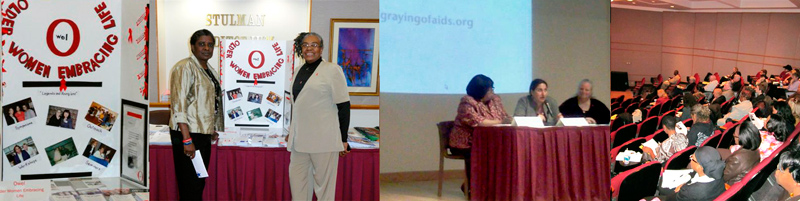
Current approaches to addressing aging and HIV issues on the ground and in communities were explored in a three-person panel. Carolyn Massey discussed her role with the Baltimore HIV Planning Council and her work as Executive Director and member of OWEL (Older Women Embracing Life), a support group for older HIV-positive women that has been hosting the annual Legends and Young’uns: Phenomenal Women Living Longer with the Challenge of HIV conference since 2006; she was so focused on highlighting the important work of these organizations that she almost forgot to mention that she also identifies as an older woman, activist, and educator living with HIV/AIDS. Debbie Batson described the impressive diversity of resources and programs provided through Rivington House, a New York City-based residential facility that works to integrate traditional and alternative therapies and address the physical, mental and spiritual needs of people living with HIV/AIDS; so many people in the audience expressed their admiration for and curiosity about the Rivington model that she offered a personal invitation to attendees interested in checking it out for themselves. And Graying’s Co-Director and Director of Community Engagement, Naomi Schegloff, introduced attendees to The Graying of AIDS, shared a teaser for the project, and stressed the central importance of dialog and storytelling in breaking down the stigma surrounding HIV/AIDS.
A big-picture perspective came from Cyd Lacanienta of Intergroup Services, who addressed the impact of national policy when she teased out some of the complexities concerning the Affordable Care Act as it relates to HIV/AIDS. Terry Hogan shared some of the highlights from the materials in the Winter 2011 issue of HIV Specialist, which focused on the experiences of older adults living with HIV and included many images and quotes from Graying.
Dr. George Siberry from NIH’s National Institute of Child Health & Human Development brought a twist to discussions of “aging with HIV,” citing parallels between the challenges and comorbidities experienced by older adults living with HIV/AIDS and the patients he works with, “aging” perinatally infected youth.
Dorcas Baker rounded out the day by bringing the conversation back to how concerned health care providers connect patients with treatment in the first place, expanding HIV testing initiatives and increasing access to quality care.